
Understanding your sales funnel is crucial for any B2B business looking to improve conversion rates and drive revenue growth. A well-mapped sales funnel helps you identify where prospects drop off, which stages need improvement, and how to nurture leads more effectively.
What Is a Sales Funnel?
A sales funnel represents the journey your potential customers take from first hearing about your business to making a purchase. Think of it as a roadmap that guides prospects through different stages of awareness, interest, and decision-making.
The funnel metaphor works because many people enter at the top, but fewer move through each subsequent stage. Your job is to optimise each stage to maximise the number of prospects who progress to become paying customers.
The Four Core Stages of a B2B Sales Funnel
Awareness Stage
At this initial stage, prospects recognise they have a problem but may not know your solution exists. They’re researching their challenges and looking for information to better understand their situation.
Common activities include reading blog posts, downloading whitepapers, attending webinars, or searching for industry-specific content. Your goal here is to provide valuable information that positions your company as a trusted authority.
Interest Stage
Once prospects understand their problem, they begin actively researching solutions. They’re comparing different approaches, reading case studies, and seeking recommendations from peers.
This stage is perfect for demonstrating how your service addresses their specific pain points. Content like detailed guides, product comparisons, and customer success stories work particularly well here.
Consideration Stage
At this stage, prospects have shortlisted potential solutions and are evaluating specific providers. They’re likely requesting demos, speaking with sales teams, and comparing pricing and features.
Your focus should be on differentiating your offering and addressing any concerns or objections. Free trials, personalised demonstrations, and detailed proposals help move prospects towards a decision.
Decision Stage
The final stage is where prospects choose their preferred solution and become customers. They’re ready to make a purchase but may need final reassurance about their choice.
Social proof, testimonials, and clear onboarding processes are essential here. You want to make the buying process as smooth as possible whilst reinforcing their decision to choose your company.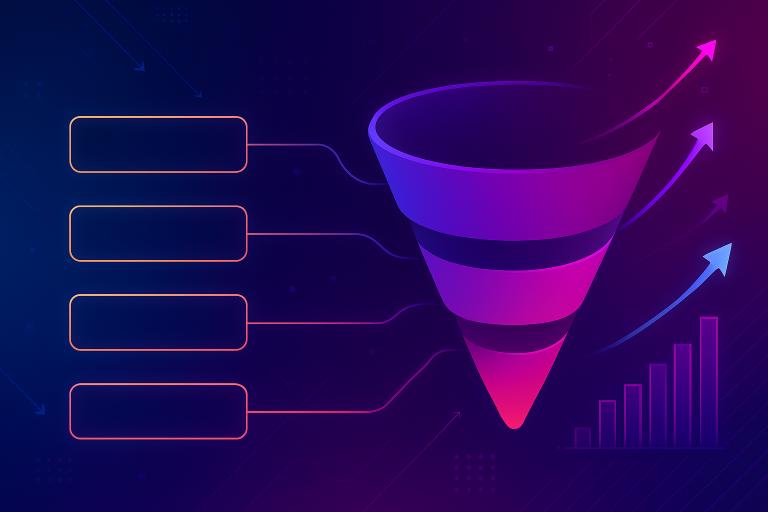
Mapping Your Current Sales Process
Before optimising your funnel, you need to understand how it currently performs. Start by identifying all the touchpoints where prospects interact with your business. This includes website visits, email opens, social media engagement, phone calls, and meetings.
Track key metrics at each stage, such as conversion rates between stages, time spent in each phase, and common drop-off points. This data reveals where your funnel needs attention and which areas are performing well.
Customer relationship management software provides valuable visibility by tracking prospect behaviour and creating detailed customer journey maps. This helps identify patterns and opportunities for improvement.
Optimising Each Funnel Stage
Top of Funnel Improvements
Focus on creating high-quality content that attracts your ideal prospects. Website visitor identification tools can help you understand which companies are showing interest in your services, even if they haven’t yet made contact.
Search engine optimisation ensures your content reaches prospects when they’re actively researching solutions. Email outreach and LinkedIn automation can also introduce your brand to potential customers who match your ideal customer profile.
Middle of Funnel Enhancement
This stage requires more personalised communication and nurturing. Email sequences that provide relevant content based on prospect behaviour help maintain engagement whilst building trust.
LinkedIn outreach is particularly effective for B2B prospects, allowing for professional, direct communication. The key is providing value at every interaction rather than pushing for an immediate sale.
Bottom of Funnel Conversion
At this stage, prospects need confidence in their decision. Clear pricing, detailed proposals, and responsive sales support are essential. Cold calling can be effective here for addressing final concerns and closing deals.
Streamline your sales process to remove any friction that might prevent prospects from moving forward. Simplify contracts, offer flexible payment terms, and provide excellent customer service to ensure a smooth close.
Measuring and Improving Funnel Performance
Regular analysis of your funnel performance helps identify opportunities for improvement. Key metrics include conversion rates between stages, customer acquisition costs, and lifetime customer value.
A/B testing different approaches at each stage reveals what resonates most with your prospects. This could include testing different email subject lines, call-to-action buttons, or content formats.
Remember, funnel optimisation is an ongoing process. As your market evolves and your business grows, your funnel needs to adapt accordingly.
A well-structured sales funnel creates a predictable system for generating revenue and supporting long-term business growth.

