
Many B2B sales teams struggle with whether they need a CRM or a Sales Engagement Platform. The truth is, it’s not a choice between the two. For modern prospecting and sales success, you need both systems working together seamlessly.
Understanding the Core Differences
Customer Relationship Management (CRM) systems act as your central database. They store contact details, track deals, and provide visibility into your pipeline. Think of your CRM as the organised filing cabinet for your customer data.
Sales Engagement Platforms (SEPs), on the other hand, are built for action. They manage outreach through email sequences, LinkedIn automation, cold calling, and track interactions across touchpoints. Where CRMs focus on storage and management, SEPs focus on driving conversations and prospecting activity.
Why CRMs Alone Fall Short
CRMs were not designed for today’s multi-channel outreach environment. They work well for tracking existing customers but quickly fall short for active prospecting.
-
Most CRMs can’t handle personalised email sequences at scale.
-
LinkedIn automation—vital for UK B2B prospecting—isn’t built in.
-
Cold calling features are limited to storing numbers, with no analytics or local presence.
-
CRMs don’t reveal website visitor activity, meaning you miss out on warm leads already engaging with your brand.
Why Sales Engagement Platforms Alone Aren’t Enough
While SEPs are excellent at outreach, they lack the broader functionality of a CRM.
-
Pipeline and deal management become difficult without CRM tracking.
-
Customer service suffers when there’s no full history of account activity.
-
Outreach metrics are detailed, but revenue impact is harder to track.
This leaves a gap when trying to manage the full customer lifecycle from prospect to long-term client.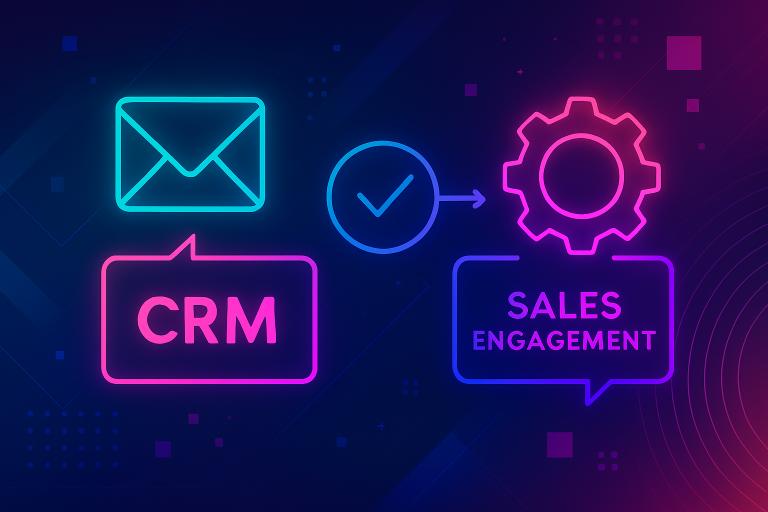
The Power of Integration
When CRMs and SEPs integrate, you get the best of both worlds.
-
Outreach data flows directly into the CRM, improving pipeline visibility.
-
Personalised campaigns can be triggered based on CRM information.
-
Website visitor identification connects prospect activity with customer records.
-
Re-engagement campaigns and upsell sequences can be automated for existing clients.
This integration creates a complete ecosystem, ensuring no lead slips through the cracks while maintaining consistent communication across every touchpoint.
How SendIQ Bridges the Gap
At SendIQ, we bring together sales engagement capabilities with seamless CRM integration.
-
Email outreach sequences are powered by CRM data, delivering authentic, personalised messages.
-
LinkedIn automation syncs with your database for consistent multi-channel communication.
-
Cold calling tools—complete with call recording, analytics, and local presence—feed directly into CRM records.
-
Website visitor identification uncovers companies showing intent and passes this intelligence straight to your CRM.
This means every prospecting activity is connected, trackable, and aligned with your sales pipeline.
Making the Right Choice
The question isn’t “CRM or Sales Engagement Platform?”—it’s how fast you can get them working together.
Audit your current setup. If your CRM is strong but outreach is weak, add sales engagement. If you’re generating leads but losing them in your pipeline, strengthen your CRM.
Most importantly, prioritise integration quality. Even the best CRM or SEP won’t deliver results if they operate in isolation.
For modern B2B success, you need both relationship management and active outreach working in sync. Choosing one over the other will only hold your sales team back.

